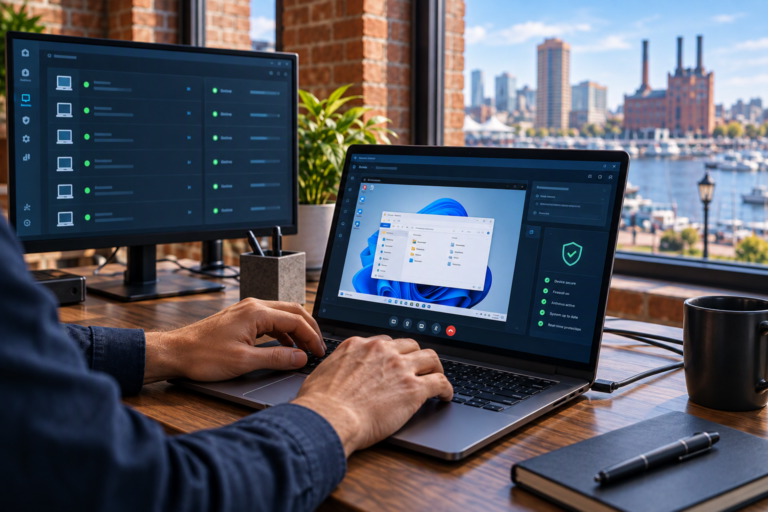

IT asset management in Baltimore helps small businesses understand the technology they own, use, and depend on. SyncTek Solutions provides asset and inventory management, technology documentation, and planning within its managed IT capabilities. The goal is to make equipment easier to support, identify overlooked responsibilities, and prepare for future needs without unnecessary spending.
When a business grows a few devices at a time, technology records can fall behind. A spare laptop disappears into a cabinet, an older workstation remains in daily use, and nobody is certain which employee has which computer. Better organization helps turn those unknowns into useful information.
IT Asset Management in Baltimore for Better Technology Visibility
An IT asset is a technology resource used by your organization. Computers and network equipment are common examples. Depending on the scope of an inventory, software assignments, subscriptions, and related documentation may also be relevant.
Asset management goes beyond making a list. It connects information about technology with decisions about maintenance, access, support, and replacement. Knowing a computer exists is useful; knowing who uses it, whether it is managed, and when it may need replacement is more useful.
For organizations without an internal IT department, that visibility can reduce guesswork and make everyday support conversations more productive.
Common Problems an Organized Inventory Helps Solve
- Unclear device ownership: Equipment assignments are difficult to track when employees change roles.
- Unexpected replacement needs: Aging computers are overlooked until they interfere with work.
- Inconsistent maintenance: Devices outside the management process may miss updates or attention.
- Slow troubleshooting: Missing equipment details create extra questions when problems occur.
- Unnecessary purchases: Available equipment may be forgotten when a new employee starts.
- Scattered documentation: Important technology information is spread across emails and informal notes.
These issues affect small offices, home-based businesses, and teams working across multiple locations. A business in Towson or White Marsh can benefit from the same basic discipline as a larger organization without adopting an unnecessarily complicated process.
What SyncTek Solutions Can Provide
SyncTek Solutions supports asset and inventory management as part of its broader approach to proactive technology management. Related capabilities include workstation and device management, technology documentation, user administration, performance monitoring, and technology planning.
Depending on the selected service scope, asset management can support discussions about:
- Which business computers are managed and supported.
- How equipment is assigned and used.
- Which systems need maintenance or further review.
- Where inconsistent technology creates support challenges.
- When replacement or upgrades should be considered.
- How device changes affect onboarding and offboarding.
Microsoft 365 license management is also available through related Microsoft 365 services. Confirm whether software and subscription records belong within your asset-management scope rather than assuming every application or vendor account is included.
How a Practical Asset Management Process Works
Establish a Useful Starting Inventory
Begin with the equipment that supports daily operations. Useful records may include device type, identifying information, assigned user, location, and support status. The appropriate detail depends on the business and the services selected.
An inventory should be understandable enough to use. Collecting extensive information that nobody maintains is less helpful than keeping essential records current.
Connect Records With Support Needs
Device information becomes more valuable when it supports real decisions. For example, identifying an older computer can prompt a discussion about operating system support, performance, or replacement. Knowing which devices are managed can help clarify maintenance coverage.
Keep Changes Visible
New purchases, equipment transfers, and employee departures should prompt record updates. Establishing responsibility for reporting those changes helps prevent an inventory from becoming outdated shortly after it is created.
Plan the Technology Lifecycle
A device lifecycle includes acquisition, setup, use, maintenance, replacement, and retirement. Planning these stages helps reduce last-minute decisions. Retirement planning should also consider remaining business information and account access, rather than treating an old computer as only a hardware item.
Why Choose Professional Asset Management Support?
A spreadsheet can be a useful starting point, but records alone do not explain what to do next. Professional guidance helps translate equipment information into practical maintenance and budgeting decisions.
SyncTek Solutions emphasizes personalized service, understandable recommendations, and long-term reliability. Related services such as Computer Support, Patch Management, Endpoint Security, and Technology Consulting help connect inventory information with ongoing care.
Month-to-month service options and straightforward pricing support flexible planning. Features and included professional service hours vary, so review current pricing and confirm the scope that fits your organization.
FAQs
Is asset management only for large businesses?
No. Even a small team can benefit from knowing which devices it uses, who has them, and which equipment needs attention.
Does an inventory automatically protect my computers?
No. An inventory improves visibility. Protection still requires appropriate maintenance, endpoint security, account controls, and other safeguards.
Can asset management help with budgeting?
Yes. Better equipment information supports replacement planning and helps identify existing resources before new purchases. It does not guarantee a particular cost reduction.
Get Your Business Technology Organized
Call SyncTek Solutions at 410-368-0084 or email support@syncteksolutions.com. Request a technology assessment to discuss your devices, documentation, and a practical approach to ongoing IT asset management.