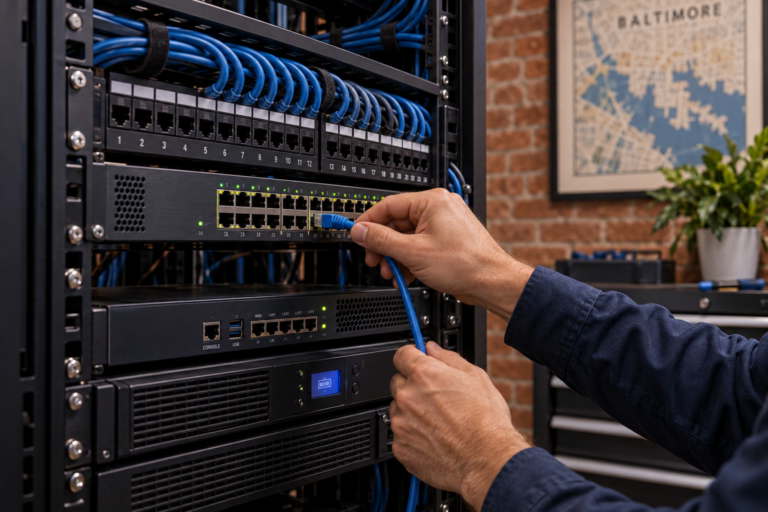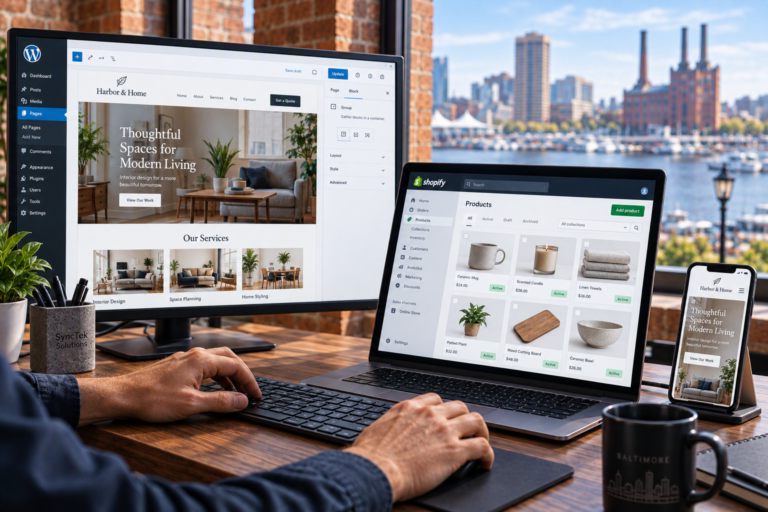

IT Planning & Standardization in Baltimore, MD helps small businesses replace disconnected technology decisions with a consistent, manageable approach. SyncTek Solutions helps organize equipment, software, security practices, and future upgrades so your technology supports daily work instead of creating avoidable complications.
Many businesses grow one purchase at a time. A laptop is replaced when it fails, a new application is added for one employee, and network changes are made without updating documentation. Each decision may seem reasonable on its own, but the combined environment can become difficult to support. Planning brings those pieces together.
IT Planning & Standardization in Baltimore, MD
IT planning establishes what your business needs now and what it should prepare for next. Standardization creates agreed ways to select, configure, maintain, and document technology. The objective is not to make every employee use identical tools. It is to reduce unnecessary differences while preserving the capabilities each role requires.
For a small Baltimore-area business without internal IT staff, these practices provide a useful foundation. They make new equipment purchases easier, help employees receive consistent setups, and give technical support a clearer picture when problems occur.
What a Practical IT Plan Can Address
SyncTek Solutions provides technology planning, documentation, standardization guidance, and related managed services. Depending on your priorities, planning may cover:
- Equipment inventory: Understanding which computers and network devices are in use.
- Replacement priorities: Identifying aging or unsuitable equipment before it becomes a larger disruption.
- Standard configurations: Defining appropriate software, updates, and security settings.
- User access: Establishing role-based account and permission practices.
- Microsoft 365: Reviewing administration, licensing, and collaboration needs.
- Network requirements: Planning connectivity, Wi-Fi, and supported equipment.
- Backup priorities: Identifying important information and recovery requirements.
- Budgeting: Organizing improvements into manageable stages.
The scope should reflect your business rather than a generic checklist. A home office may need a straightforward equipment and backup plan, while a growing team may need more detailed standards for accounts, devices, and shared resources.
Reduce Avoidable Differences Without Limiting Your Team
Standardization makes support more predictable. If computers follow an agreed configuration, it is easier to identify unusual behavior, apply updates consistently, and prepare a replacement device. Documentation also reduces the need to rediscover the same information during every support request.
Useful standards might define supported operating systems, required business applications, account naming practices, MFA expectations, and how new equipment is recorded. They can also specify who approves technology purchases and access changes.
Exceptions still have a place. An employee running specialized software may need different hardware or permissions. The important distinction is that the exception is intentional, documented, and reviewednot an unexplained variation that complicates future support.
How the Planning Process Works
Understand Current Systems and Business Needs
A useful plan begins with existing equipment, recurring issues, employee workflows, and upcoming changes. Growth, remote work, and software requirements can affect which improvements deserve attention first.
Identify Gaps and Set Priorities
Not every inconsistency requires immediate action. Unsupported systems, missing backups, or excessive administrative access may deserve earlier attention than cosmetic differences between computers. Recommendations should explain both the concern and its business impact.
Create a Realistic Roadmap
A roadmap is an ordered plan for making improvements over time. It can separate immediate tasks from later replacements and identify dependencies. For example, an application compatibility review may need to happen before a computer upgrade.
Apply Standards and Review Them
Standards become useful when they are reflected in actual setups, documentation, and maintenance. They also need periodic review as applications, staffing, and business requirements change. Related managed IT services can support ongoing maintenance within the selected service scope.
Plan for Costs and Operational Continuity
Unplanned replacements can make technology spending unpredictable. A documented replacement approach helps you anticipate purchases, discuss priorities, and avoid replacing everything at once when a phased approach is appropriate.
Planning should also consider disruption. Data migration, application setup, testing, and employee communication can affect when work should happen. Buying equipment is only one part of a successful change.
Security and recovery deserve separate attention. Consistent security settings help reduce risk, while backups provide recoverable copies of important information. Neither eliminates every potential interruption, but both belong in a practical technology plan.
Why Choose SyncTek Solutions?
SyncTek Solutions brings a practical small-business perspective to IT planning. Recommendations emphasize reliability, understandable choices, and appropriate spending rather than unnecessary complexity.
As a Baltimore-area technology partner, SyncTek Solutions can connect planning with computer support, network management, Microsoft 365 administration, and backup services. Current pricing and the proposed service scope should be reviewed before implementation.
FAQs
Does standardization mean replacing all our computers?
No. Existing equipment may remain useful. A phased plan can address the most important gaps first and establish standards for future purchases.
Can we keep specialized applications?
Yes, planning should account for required applications. Compatibility, support needs, and documented exceptions can be considered when developing standards.
Is planning only useful for growing companies?
No. Stable businesses also benefit from organized records, replacement priorities, consistent settings, and fewer improvised technology decisions.
Build a More Manageable IT Environment
Call SyncTek Solutions at 410-368-0084 to request a technology assessment. Discuss your current systems and create a practical direction for more consistent, supported business technology.