
Network equipment upgrades in Baltimore, MD help small businesses and home offices address aging hardware, changing workloads, and connectivity limitations. SyncTek Solutions provides practical guidance and network support to determine what should be replaced, what can remain in service, and how to plan the transition. The goal is a more reliable, manageable network without unnecessary spending.
A network that worked well several years ago may struggle after you add employees, wireless devices, cloud applications, or remote access. However, slow performance alone does not prove that every device needs replacement. Reviewing the existing environment helps separate equipment limitations from configuration problems and internet service issues.
Network Equipment Upgrades in Baltimore, MD
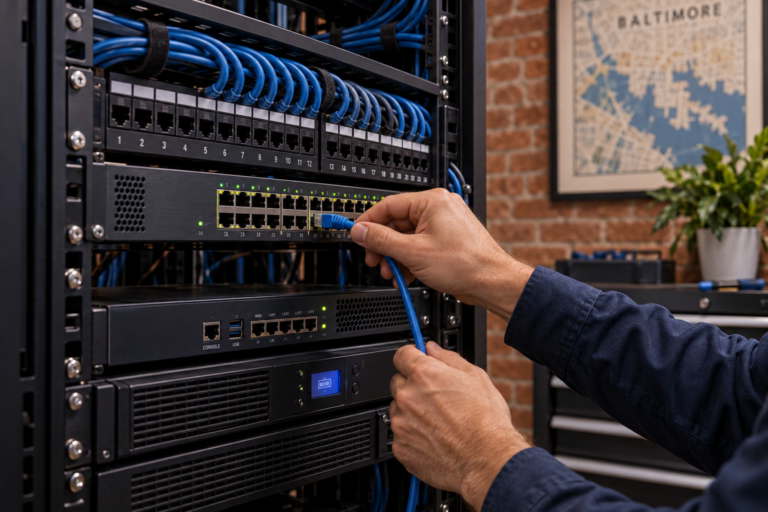
An upgrade may involve replacing a router, firewall, network switch, or wireless access point. It can also mean moving to equipment with better management features, suitable capacity, or support for network separation. The right choice depends on the tasks your network needs to support.
SyncTek Solutions works with smaller organizations and individuals who want understandable recommendations. For a Baltimore business without internal IT staff, that means connecting equipment decisions to practical outcomes such as steadier meetings, sufficient wired connections, clearer administration, and easier troubleshooting.
Signs Your Equipment Deserves a Review
- Frequent instability: Important devices require repeated restarts or disconnect unpredictably.
- Limited capacity: Available ports or wireless resources no longer match your needs.
- Unsupported hardware: The manufacturer no longer provides relevant firmware or security updates.
- Missing capabilities: Existing equipment cannot support required guest separation, management, or VPN features.
- Business growth: New work areas, staff, or locations place different demands on the network.
- Inconsistent equipment: An accumulation of unrelated devices makes support and administration difficult.
These are reasons to assess the network, not automatic proof that a full replacement is necessary. An individual cable, incorrect setting, or coverage issue may be responsible for symptoms that appear more serious.
What an Upgrade Assessment Considers
A useful review starts with the current equipment and how it is being used. Device models, available firmware, port capacity, wireless coverage, and existing configuration help establish what the network can realistically support. Application requirements and expected changes provide context for replacement recommendations.
Compatibility matters as much as specifications. A faster access point may still be limited by the switch behind it. A replacement router needs to support required remote connections and security settings. Considering the full connection path reduces the risk of purchasing hardware that does not resolve the actual limitation.
SyncTek Solutions can also help prioritize improvements. Essential reliability or support concerns may deserve attention before optional features. A staged approach can make sense when existing components remain suitable and the network can be improved without replacing everything at once.
A Planned Upgrade Process
Identify the business requirement
Define what needs to improve: stability, coverage, device capacity, security controls, or manageability. Clear goals provide a better basis for equipment selection than purchasing solely on advertised speed.
Choose appropriate replacements
Recommendations should reflect your current needs and reasonable growth expectations. Depending on the project, this may include router replacement, managed switches, newer access points, or equipment that supports consistent administration.
Prepare for the transition
Existing settings, required connections, and configuration backups should be considered before changes are made. Scheduling and a practical recovery approach help manage the disruption that can occur when essential network equipment is replaced.
Deploy and validate
Replacement equipment needs configuration and testing, not just physical connection. Validation should cover relevant everyday tasks, such as internet access, Wi-Fi, shared printers, business applications, and authorized VPN connections. Documentation helps establish a clear starting point for ongoing support.
Maintain the Value of Your Upgrade
New hardware still needs attention over time. Firmware management, configuration backups, monitoring, and periodic reviews support long-term reliability. For applicable managed services, SyncTek Solutions can help keep network administration organized and identify issues before they create unnecessary downtime.
Related services include Network Troubleshooting, Router & Network Equipment Installation, and Managed Network Services. Combining the appropriate services can help connect the initial equipment decision with deployment and continued support, while keeping the scope clear.
FAQs
How often should network equipment be replaced?
There is no single schedule that fits every device. Manufacturer support, reliability, security requirements, capacity, and business needs are more useful indicators than age alone.
Will new equipment make my internet faster?
It may remove a local bottleneck, but it cannot increase your provider’s service capacity. Testing helps determine whether the limitation is inside your network or elsewhere.
Can upgrades happen in stages?
Often, yes. A phased plan may be appropriate when components are compatible and the sequence preserves required functionality. The assessment should identify dependencies before equipment is purchased.
Request a Technology Assessment
Talk with SyncTek Solutions about your current equipment and what needs to improve. Call 410-368-0084 or email support@syncteksolutions.com for practical upgrade guidance and current pricing information. You can then make an informed decision about the scope and timing of your network improvements.